
By Bria Pleasant
How one student became the teacher
Three – that’s the number of purely public Montessori schools in the state of Maryland, and all three programs exist in one school district, Prince George’s County Public Schools (PGCPS). I started in the PGCPS Montessori program as an eager three-year-old when Montessori classrooms co-located in conventional schools across the county. After the end of my 1st year of lower elementary, the district centralized the programs into two Montessori schools, one in the north of the county, one in the south. I went south to John Hanson Montessori where I would complete the Montessori program as an 8th grader and where I now serve as the Montessori Program Coordinator.
If you had asked me as a graduating high school senior if Montessori was my plan for the future, I would have looked at you like you were crazy. Senior year was extremely difficult. I cared for my grandmother alongside my family as her health continued to decline. She passed the day I went to graduation rehearsal. So, as you can imagine, college was the absolute last thing on my mind. If I’m being honest, I didn’t even want to go to college and made sure everyone knew. Natika Cromer, the best College Summit (now Peer Forward) teacher ever, took me on a college tour field trip and changed that for me.
Did I expect to fall in love with a school while on a trip? Absolutely not. I went to get out of school and eat in Salisbury’s highly sought after cafeteria, Commons. Yes, the food was as good as it was ranked to be. With a heart now set on going to college (for the renovated dorms, housekeeping, and food), the decision about choosing a major was huge.
I was going to be a first generation college graduate so it had to be something good. Right? Interdisciplinary Studies! Because who at 18 truly knows what they want to do for the rest of their lives? But I can spend time exploring and building my expertise across areas, right? Nope, that was “a waste of money” according to one adult in my life. That’s okay, we shift. What’s going to get me the most money? Tech is a promising industry, computer science it is!
I went into undergrad with a plan of completing my degree in Computer Science and spending a fifth year in Estonia studying cybersecurity. The ultimate goal was to be an “ethical hacker” for a three-letter government agency. Did I love my program? Absolutely. But I was bored! It was in my fall semester of junior year, on the last night to drop classes for a “W” instead of a grade, when I dropped ALL of my degree classes and texted my family to the tune of “I’m changing my major, nothing is wrong, don’t ask me anything about it.”
The only class I enjoyed going to at the time was creative writing. Naturally, the only reasonable course of action was to major in creative writing, right? Right! The next year and a half I wrote pieces about things I wanted to write about until my heart was content.
The reality of being a graduating college senior hit at some point. What was next for me? What do people with English degrees do? I could be a teacher, but they really don’t make good money, so that won’t work. I could go into a master’s program for creative writing, but do I really want a career as an author? I am really good with children and have spent most of my life working with children in some capacity, so teaching? I know for sure I don’t want to be a traditional classroom teacher. If I am going to pursue teaching, it has to be in a Montessori classroom.
Whenever I had the chance to, I always went back to my high school, Suitland High School, to visit my former teachers. Educators, never underestimate the power you have in your spheres of influence. The time you spend with your students, the life lessons you teach, and the relationships you build with them carry them through life whether they want to admit it or not. On this particular visit, I made sure to catch up with one of the assistant principals, Ms. Strayhorn. She had been my assistant principal during my time at John Hanson Montessori and again during my later years at Suitland High School so we were extremely familiar.
During that visit, Ms. Strayhorn taught me about the Montessori organizations that exist in the United States and how to go about finding a training center. After some independent research and finding a program I liked, I applied to and was accepted into the Loyola University Maryland and Washington Montessori Institute’s graduate and training program. I remember going to the information session where AMI trainer Jennifer Shields mentioned having to choose a level for training and I was so torn. Do I choose Primary or Elementary?
Primary was arguably the most exciting time of my early childhood. I can vividly remember my first impression of school. My grandmother escorted me to my classroom where I met my teachers. Students were seated around the carpet where I would join them on the floor and my grandmother would take her seat in an adult-sized chair to the right. After some moments, “stand for the pledge of allegiance” rang out over the announcements. Confused, I looked at my grandmother for what to do and a silent nod was returned. I stood.
The next three years were filled with: brushing my teeth after lunch at the big sink that was so high we had to use a step stool, watching Dr. Seuss on the big screen, delighting in meals cooked right in class, planting, harvesting, and learning about vegetables we planted outside our back door, looking after everything and everyone in class (I’ve always had a nurturing spirit), voting for President Bush on the chalkboard because his name started with the letter B like mine did, playing games on the Sesame Street Club program on the computers under the chalkboard (yes we had classroom computers in Primary, and we got to work on them during the work cycle!), working with the materials, reading with the assistant teacher, and singing!
My elementary years were spent being obsessed with learning; getting to do the second grade spelling words as a first grader, learning every possible fact I could about every bird, discovering words like “philanthropist” and “cacophony”, obsessing over deciduous trees, and who could forget creating an ungodly amount of PowerPoint presentations about ancient countries—and the food that we made and ate as lessons!
All of my elementary school teachers—Ms. Simpson, Ms. Womack, Ms. Massey, Ms. Butler, and Ms. Piel—not only left their mark on me as a student but cultivated a love for the Montessori program that would draw me back in an instant. I ultimately decided on Elementary training.
I’m grateful for the opportunity to have worked alongside some amazing people during my teacher training who are using their experience and platforms to change the public sector of Montessori across the DC Metropolitan area. Something that I will forever cherish about my Montessori education is how teachers cultivated my voice to advocate for my beliefs. If you don’t take anything else away from my story, remember this one thing: people should be extended the same graces being a learner that we extend to children in our classrooms. You never know what people carry in their invisible book bags as they navigate life. Every single interaction you have with them can extinguish the passions they are pursuing. As Montessorians we have to step back and humble ourselves as servants of people, not just children.
The children I chose to serve are the children who walked the same halls I did as a student. I am a proud product of Prince George’s County Public Schools and their public Montessori program. Until sitting in Montessori training lectures it never even dawned on me that the private and public charter sectors of Montessori existed. I pride myself on everything public because inequity and limited access for minority and underserved communities continue to exist. The public school system allows families who don’t have the resources and access to programs like Montessori the chance to be part of this amazing system.
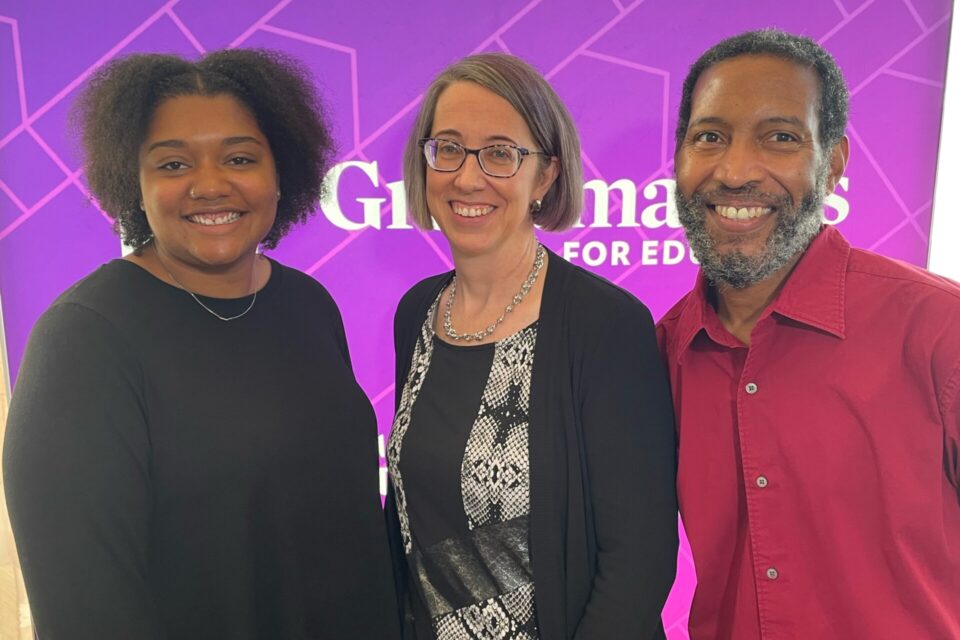
As a public school employee, my state and district determined that a Master’s degree in Montessori education wasn’t enough. I still needed to earn 33 additional credits and sit for PRAXIS exams in order to be certified as a teacher. However, in 2023, thanks to the hard work of Maryland Delegate Julian Ivey, Nancy Anselm, Chair of Montessori Schools of Maryland, Wendy Shenk-Evans, former Executive Director of Montessori Public Policy Initiative, and all those who provided testimony for Montessori teacher licensing, legislation was passed that allows Montessori teachers to rightfully take up their space in the public system as credentialed Montessori practitioners. I gave testimony before the legislature in that process, and I’m forever grateful for Wendy and Nancy taking the time to listen to my story and inviting me to join them at the state house to advocate for licensing, and again an invitation to speak before educational grant writers to advocate for fair policies for public Montessorians.
As I enter into year seven of my career, I can’t help but reflect on how my journey has come full circle. From that first day of Primary, to Montessori teacher training, then returning to my former school to teach Lower Elementary, to advocacy, to the curriculum writing team, to teaching Upper Elementary, to panels, to 40 under 40 with AMS and AMI, to now serving as the Program Coordinator for my school, the work is yet to be finished. Leave your mark while also creating a path for the next generation to follow.
Bria Pleasant
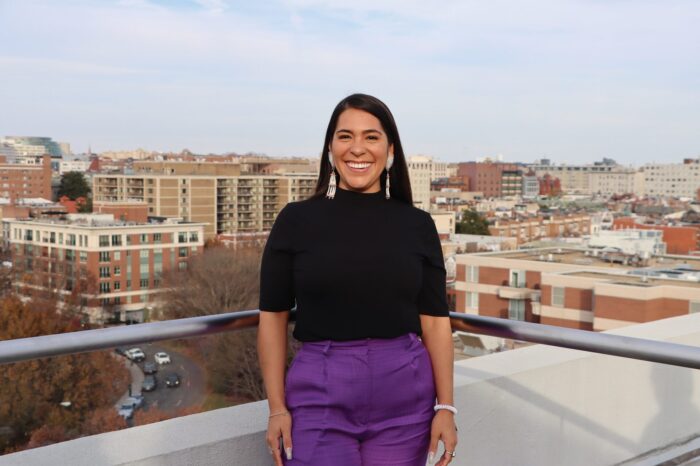
Bria Pleasant is Montessori Program Coordinator at John Hanson Montessori.
You may also like