

Academic studies support Montessori’s observations about classrooms design
During my Montessori training in the early 2000s, I was encouraged to create a minimalist classroom, based on the idea that uncluttered walls would reduce distraction, support concentration, and aid normalization within the prepared environment.
Although I was given little research to support this guidance, it resonated with what I observed. Across Montessori, Head Start, public school, university lab preschool, and independent school settings, I noticed striking differences in how teachers used and organized classroom space—and consistently found Montessori environments to be calmer, more focused, and more orderly.
As a doctoral student, I became increasingly interested in how classroom environments influence attention, regulation, and learning, and whether these effects vary across children. These questions led me beyond Montessori tradition into cognitive science, environmental psychology, architecture, and neuroeducation.
For public Montessori teachers, much of this research may feel familiar: the prepared environment, visual simplicity, purposeful materials, movement, autonomy, and connection to nature are already central to Montessori practice. I found that research supports what Montessorians have long observed: the environment is not simply the setting for learning—it is part of the learning experience itself.
Why classroom design matters
Attention is a gateway to learning—before new information can be encoded, it must first be noticed, selected, and attended to. Classroom environments matter for learning because they influence the conditions under which attention and regulation occur.
In early childhood, these processes are still developing and are influenced not only by individual differences but also by sensory and physical environments. Attention is not simply a characteristic within the child; it emerges through an interaction between the child and the environment.
The sensory environment is an important part of this interaction. Children continually process visual information, sounds, movement, lighting, temperature, textures, and physical proximity.
When sensory input is excessive, unpredictable, or difficult to filter, children may devote physiological and cognitive resources to managing it, leaving fewer resources available for learning. A child who appears distracted, impulsive, restless, or unable to sustain attention may therefore be responding not only to internal factors but also to the demands of the environment.
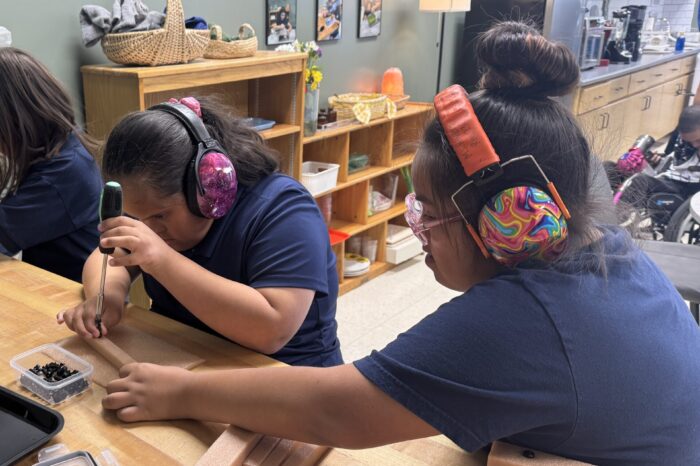
This interaction may be particularly consequential for neurodiverse students, such as children with ADHD and autism, as well as some gifted learners, who may experience heightened or atypical responses to sensory input. For children with sensory sensitivities, environmental stimuli and structures can significantly affect attention, social regulation, and consequently, learning.
Three design considerations emerge from this research: visual density, biophilic elements, and autonomy. Each can support attention, regulation, and learning while aligning naturally with principles already embedded in Montessori practice.
Visual density
Visual density refers to the amount and complexity of visual information in a classroom, including wall displays, colors, posters, charts, labels, and student work. Researchers Carrie Godwin and Anna Fisher found that visually dense classrooms can reduce focused attention, increase off-task behavior, and negatively affect learning outcomes in kindergarten students.
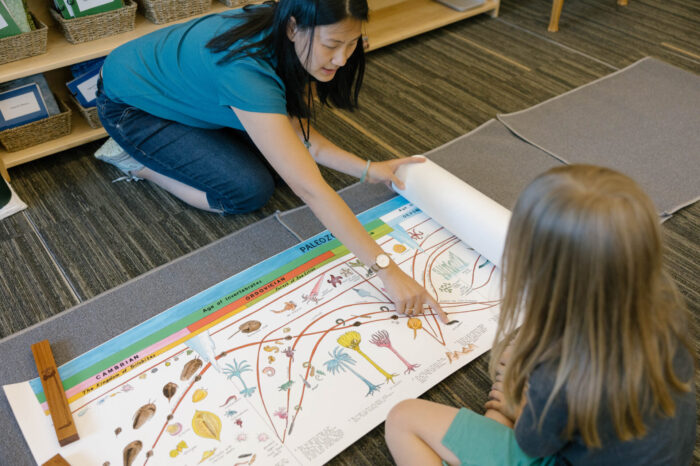
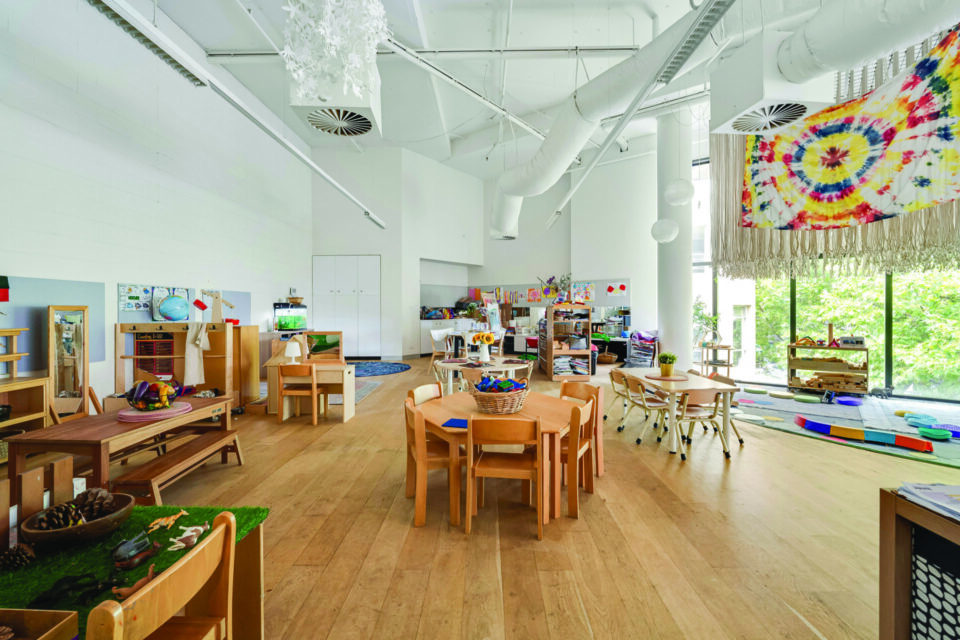
These findings offer support for a principle familiar to Montessorians: less can certainly be more. The goal is not to eliminate meaningful visual information, but to consider whether each element is serving a purpose.
One useful distinction is between information that needs to be continuously visible and information that simply needs to be accessible. Reference materials, for example, can be kept in notebooks, folders, individual cards, or other locations rather than occupying prominent wall space. Minimalism, even for Montessori teachers, is therefore more than an aesthetic preference; it can be a developmentally responsive approach to reducing visual competition for attention.
Biophilic design
Biophilic design incorporates natural elements and patterns into built environments, including natural light, plants, wood and other natural materials, views of nature, and access to outdoor spaces.
For decades, research has suggested that exposure to nature restores attention, reduces stress, and increases well-being. Recent research has found that greater exposure to green space is associated with better working memory and attention in schoolchildren, as well as lower rates of ADHD symptoms.
For Montessori classrooms, this research validates the connection between the indoor and outdoor prepared environments. Sunlight, fresh air, plants, natural materials, outdoor views, and opportunities to work outside can contribute to an environment that supports regulation by using elements of the natural environment to reduce stress.
Autonomy
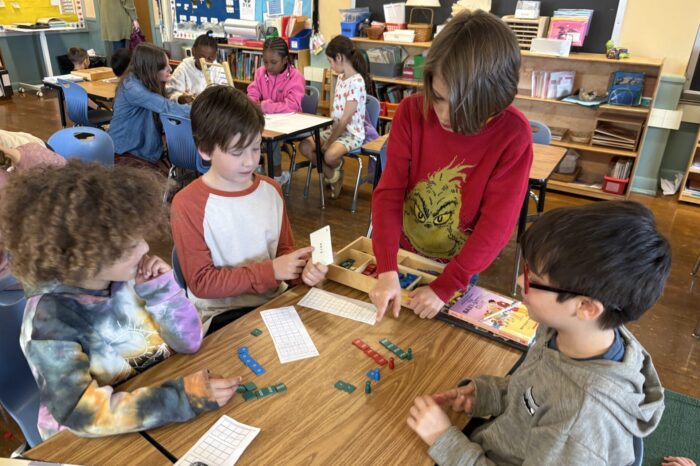
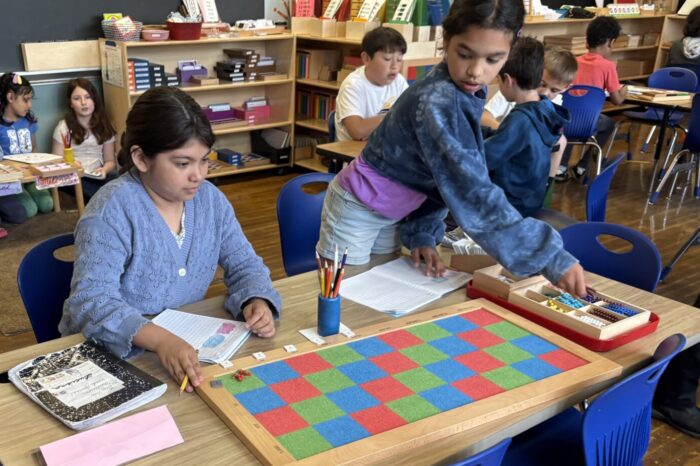
Autonomy is a defining feature of the Montessori environment. Rather than organizing learning primarily around a teacher focal point, Montessori classrooms make materials accessible and provide children meaningful opportunities to choose what to work on, where to work, and how to approach their work. These choices provide opportunities to practice skills such as planning, initiating, monitoring, adjusting, and completing tasks that undergird the development of executive function.
This process is also consistent with an embodied view of learning, in which cognition develops through children’s active engagement with their physical and social environments.
Self-coordinated movement such as carrying materials, selecting a workspace, manipulating objects, repeating an activity, and collaborating with peers allows children to coordinate their actions, sustain attention, and adapt their behavior to the demands of the task.
Autonomy, however, does not mean a lack of structure. Montessori environments provide clear expectations, predictable routines, carefully sequenced materials, and established limits. Within this structure, children have a clear invitation to exercise agency.
Application in a public school
Montessorian in a public setting, where environments may be externally dictated or inherited, can apply this research by examining the environment systematically: subtracting, organizing, and adding.
First, reduce unnecessary visual and sensory stimulation by examining bulletin boards, wall displays, competing colors, hanging materials, and rarely used items.
Ask yourself, “Does this support learning, independence, community, or orientation?”
If not, consider removing it.
Next, organize materials so they are accessible, predictable, and purposeful.
Finally, add biophilic elements such as natural light, plants, wood, natural textures, and outdoor views. The goal is not a bare classroom, but an environment in which every element has a neuroeducational purpose.
Teachers should also consider the broader sensory environment. Sound, lighting, temperature, movement, and spatial arrangement can influence attention and regulation. A child who struggles to engage may need a quieter workspace, embedded movement, reduced visual stimulation, or another way to interact with materials. Observation can help teachers determine whether the environment is contributing to what they are seeing.
Autonomy is another important application. Montessori classrooms already promote independence through accessible materials, freedom of movement, choice, and problem-solving. Teachers can ask whether the environment genuinely enables children to make decisions, manage their work, and access materials without unnecessary adult assistance.
These ideas can extend beyond individual classrooms. I have developed a Policy Brief (available at designed-for-learning.com) as an advocacy tool for use with principals, district administrators, facilities staff, curriculum leaders, and school boards.
Rather than presenting classroom design as a matter of Montessori preference, teachers can frame it as a research-based question: How can school environments better support attention, regulation, learning, and well-being? The policy brief provides a common language for connecting environmental design with educational outcomes.
Advocacy can begin with practical requests: reviewing classroom display guidelines, improving acoustics and lighting, providing flexible furniture, increasing access to natural light and outdoor views, or offering professional learning on sensory and environmental design.
Teachers can collectively document classroom observations, pilot changes, gather student and teacher feedback, and share results with administrators. The strongest advocacy connects these environmental changes to priorities districts already value, including engagement, achievement, inclusion, independence, school climate, and well-being. Montessori teachers do not need to argue that every classroom should look like Montessori. Instead, they can ask whether district policies and facilities create conditions that help children learn.
Ultimately, this research invites educators to reconsider the question, “How do I get children to pay attention?” and instead ask, “How can we design environments that make purposeful attention easier?”
For public Montessori educators, this shift offers both a classroom strategy and an advocacy strategy. The prepared environment is not simply a Montessori tradition; it is an opportunity to apply research to the way schools design spaces for learning.
For additional resources, visit designed-for-learning.com
You may also like