Progressive Education for the People, Not Just the Politicians
 MontessoriPublic Posted On April 17, 2016
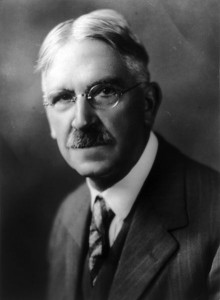 “What the best and wisest parent wants for his child, that must we want for all the children of the community. Anything less is unlovely, and left unchecked, destroys our democracy.”
—John Dewey, The School and Society, 1915
Nikhil Goyal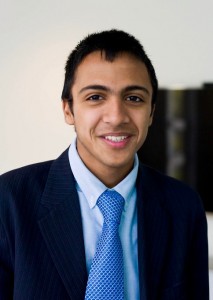 is an education activist and writer known in particular for his youth (he published his first book at 17!) and his energetic promotion of progressive education. He had an article in The Nation last month calling out education and political leaders for sending their children to schools very different from the ones they support politically: These Politicians Think Your Kids Need High-Stakes Testing—but Not Theirs. The Obamas, the Bidens, the Clintons, and the Gores, he points out, all sent children to the Sidwell Friends, an elite Quaker school in Washington, D.C. Former Secretary of Education Arne Duncan, Chicago Mayor Rahm Emmanuel, and the Obamas (when they lived in Chicago) sent their children to the University of Chicago Laboratory Schools, founded by the father of American progressive education, John Dewey. Current Secretary of Education John King sent his children to Montessori school when he was New York Education Commissioner.
Besides being elite private schools for the privileged, with tuitions up to the $30,000 range and beyond, these schools have something else in common: They offer a “progressive”, child-centered model of education, featuring exploration and discovery, curiosity, creativity, and minimal testing. Goyal contrasts these programs with public district and charter schools which serve less privileged children, describing metal detectors, dress codes, testing regimes, and rote learning. Why, he asks, is what’s good for public school children in high-poverty urban districts not good enough for Obama’s children?
It’s a question that’s been asked before. “So all white kids get to go to a school with a Montessori approach while children of color get eye control?”, asks a Nashville parent in a Salon article by Jeff Bryant, director of the Education Opportunity Network.
Parent public advocate and director of Class Size Matters Leonie Haimson made the point in In These Times back in 2012:
Just witness the sort of education Obama’s own daughters receive: small classes with plenty of personal attention from experienced teachers, a well-rounded education with art, science and music, and little or no standardized testing. … If it’s good enough for Malia and Sasha, it should be good enough for inner-city public school students in New York City or Chicago.
And in 2013, education researcher and writer Diane Ravitch caught No Child Left Behind architect Sandy Kress praising his children’s private school, which touts “small class sizes, experienced and caring teachers, daily PE, plus art, music, and electives” and, unbelievably, “no STARR test = more time to learn!”. He likes the school’s
classically driven curriculum seasoned with open-minded innovation, high moral expectations with a good dose of humor and a hilarious pinch of irreverence … Our son comes home everyday with stories of friendship, teamwork, and a mind brimming full of new thoughts.
But not everything Goyal deplores in district and charter schools for the public is about the decidedly un-progressive pedagogy. Testing and rote learning, yes. But better resources, more diverse, better prepared, supported and compensated teachers, and more toilet paper aren’t exclusively progressive values. And the solutions he offers aren’t in themselves going to change the idea of what education is for. It’s not as if there’s a popular uprising demanding progressive education, thwarted by the high cost of Montessori teachers. Finally, it’s not as if Joyal’s “working-class people demanding change” are going to come out in the streets demanding Montessori. Working class people, and public-policy making people, are not going to stop being concerned about outcomes, nor should they. Measurable outcomes matter.
Of course, what is being measured and how matters a lot as well. And as it happens, there exists a proven, century-plus old alternative education approach with demonstrated results not just with literacy and numeracy, but in the increasingly-recognized domain of “soft skills” such as self-regulation, attention, and engagement. Education and culture journalist Carly Berwick wrote about this in 2014 an excellent piece for NextCity.org (a non-profit supporting innovation in cities) — The Elite Private School Model Changing How City Kids Learn:
Yet in Hartford, New Haven, Washington, D.C., Chicago and elsewhere, new public Montessoris for children in pre-K through middle school have taken root within the past five years.
These schools, including a growing number of public Montessori schools, are working to prove that poor children of color can learn as well as anybody else — and, as important, in the same way and manner and depth as the wealthiest children just a few miles or blocks away.
This is how it happens — by showing families, teachers, school leaders, and yes, even politicians, that this “alternative” pedagogy isn’t just some kind of feel-good mysticism that is fine for privileged children who will probably learn to read anyway but dangerous for poor black and brown children who need order and discipline. Montessori is a proven, experience-backed method that works, and writers like Goyal can help us spread the word.